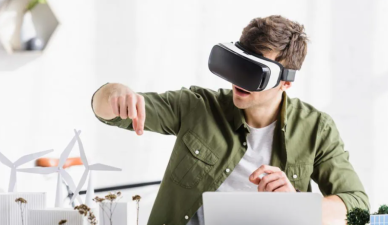
Augmented Reality (AR) is a technology that overlays virtual information onto the real world, enhancing our perception of reality through computer-generated sensory input (such as sound, video, graphics, or GPS data). Unlike Virtual Reality (VR), which creates a fully immersive digital environment, AR adds digital elements to the real world, achieving a completely new experience that combines the virtual and the real.
The core of AR technology lies in the real-time calculation of the position and angle of camera images, and the addition of corresponding images, videos, or 3D models. This technology can be traced back to the 1960s, but it only truly entered the public eye in recent years with the widespread adoption of smartphones and wearable devices.
The Development History of AR Technology AR technology has gone through several important stages:
- The Budding Stage (1960s-1990s): In 1968, Harvard University professor Ivan Sutherland developed the first head-mounted display system, "The Sword of Damocles," which is considered the prototype of AR technology.
- Laboratory Stage (1990s-2000s): In 1992, the U.S. Air Force Armstrong Laboratory developed the Virtual Fixtures system, the first fully functional AR system. In 1999, NASA used AR technology for the assembly of the X-38 spacecraft.
- Mobile AR Stage (2000s-2010s): With the widespread adoption of smartphones, AR applications based on mobile devices began to emerge. In 2009, the release of open-source AR libraries such as ARToolKit lowered the development barrier.
- Explosion Period (2010s-Present): The global phenomenon of Pokémon GO in 2016 made AR technology widely known. The launch of Apple's ARKit and Google's ARCore further propelled the development of mobile AR.
The Current State and Future of Virtual Reality (VR)
VR technology immerses users in a simulated real environment, enabling interaction with the virtual world. Currently, VR is widely used in gaming, film production, education, and other fields. With upgrades in hardware and the enrichment of the content ecosystem, VR technology will continue to develop. In the future, VR is expected to play a greater role in fields such as medicine, aerospace, and industry. For example, through simulated surgical training, it can improve the practicality and safety of medical education; in the aerospace field, VR can simulate the space environment for astronaut training.
The Current State and Future of Augmented Reality (AR)
AR technology provides users with additional information or visual experiences by overlaying digital information onto the real world. Currently, AR technology is widely used in retail, education, and industry. For example, in retail, AR technology can help consumers virtually try on clothes when shopping online; in industry, AR can provide real-time operational guidance and fault diagnosis. In the future, with the development of technologies such as 5G and AI, AR is expected to achieve even wider applications. For example, AR technology can provide richer interactive means for telemedicine; in smart city construction, AR can provide more intuitive visual presentations for urban planning and management.
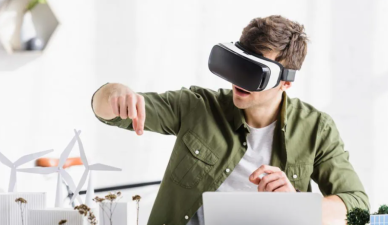
Future Trends
Integrated Development: VR and AR technologies are expected to achieve closer integration in the future. By combining the immersive experience of VR with the interactive information overlay of AR, users can be provided with a richer and more realistic virtual reality experience.
Technological Innovation: With the continuous development of hardware, software, and content ecosystems, VR and AR technologies will continue to innovate. For example, next-generation display technologies, sensors, and interaction methods will further enhance the realism and convenience of the user experience.
Cross-Industry Collaboration: VR and AR technologies have wide-ranging applications, and cross-industry collaboration will be a key factor driving technological development. For example, companies and institutions in education, healthcare, and industry will collaborate with VR/AR technology companies to jointly promote the development and application of the technology.
Policy Support: As VR and AR technologies become more widespread and developed, governments around the world will introduce relevant policies to support their development. For example, this includes formulating industry standards and specifications and providing financial support.
Talent Development: With the rapid development of VR and AR technologies, the demand for related talent will also increase. Therefore, cultivating talent with VR/AR skills will become one of the important directions for future development.
Conclusion
Augmented reality technology is blurring the lines between virtual and reality, providing us with a completely new way of perceiving and interacting. From changing the shopping experience to revolutionizing industrial processes, from innovating educational methods to reshaping entertainment forms, the application potential of AR is almost limitless. Despite some technological and social challenges, AR is expected to become as ubiquitous as smartphones within the next decade, becoming an indispensable part of our daily lives, as related technologies mature and the ecosystem improves.